Modernizing Legacy Systems: When to Refactor, Rebuild, or Retire
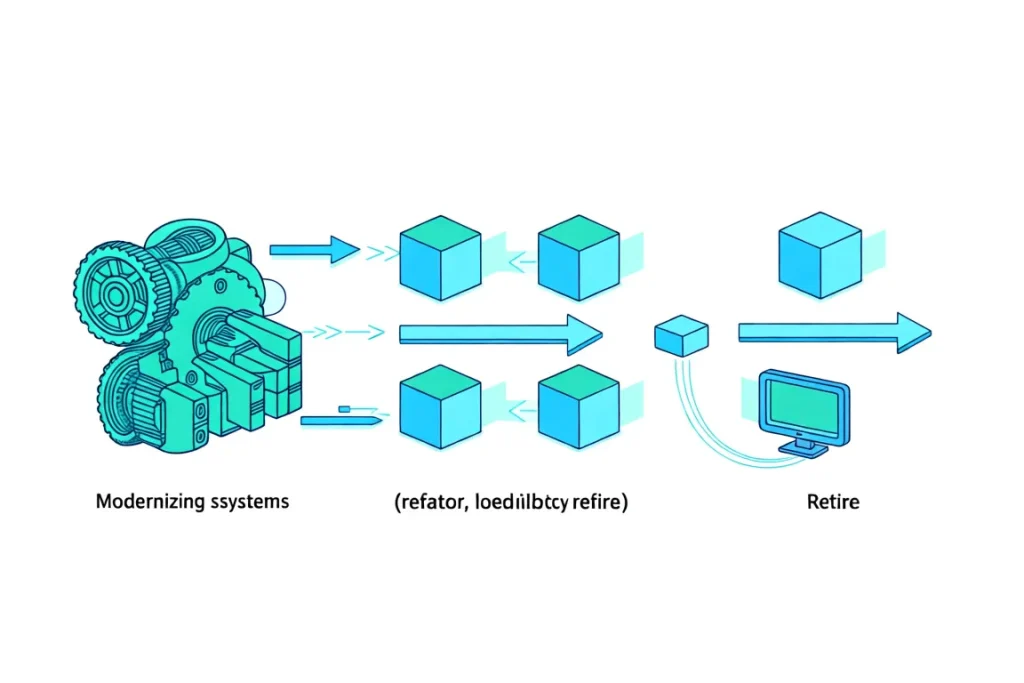
Modernizing Legacy Systems: When to Refactor, Rebuild, or Retire
You have an old system that still runs core work but costs too much to change. The first move is not to pick tools. It is to measure three things: how often the code changes, how much it costs to keep running, and whether the business rules inside it still match what the company needs today.
Run a 15-minute assessment
Grab the people who touch the system daily and answer these questions in order:
- How many change requests sit in the backlog right now?
- What percentage of developer time goes to keeping the lights on versus adding features?
- Can we test a single change in under two hours, or does every fix require a full regression cycle?
- Does the main database still match the way the business talks about orders, customers, or inventory?
If the answers show more than 60 percent of effort on maintenance and testing takes days, you already know the current state is expensive.
Pick refactor, rebuild, or retire
| Option | Use when | Example |
|---|---|---|
| Refactor | Business rules still fit, but the code is tangled and slow to change | A retailer keeps its 12-year-old Java order system but extracts the pricing logic into small, tested modules so new promotions can ship in days instead of weeks |
| Rebuild | Core rules have shifted and the old language or database blocks every new requirement | A hospital replaces its COBOL patient scheduling app with a new service that talks directly to the EHR and lets nurses book beds from a phone |
| Retire | The process the system supports no longer happens or can be handled by another tool already in use | Finance stops using a custom FoxPro reporting tool once the ERP dashboard covers the same monthly close numbers |
Execute the chosen path
Start with a thin slice that proves the direction. If you chose refactor, pick the single most painful module, write tests around it, then improve only that piece. Ship it, measure the drop in support tickets, then decide on the next slice.
If rebuild looks right, build the new version to talk to the old database first. Run both in parallel for one billing cycle so the business sees no gap. Cut over only after finance signs off on the numbers.
When retirement wins, map every report or export the old system still feeds. Either move those feeds to the replacement tool or drop the need entirely. Delete the old server only after the last user confirms they no longer log in.